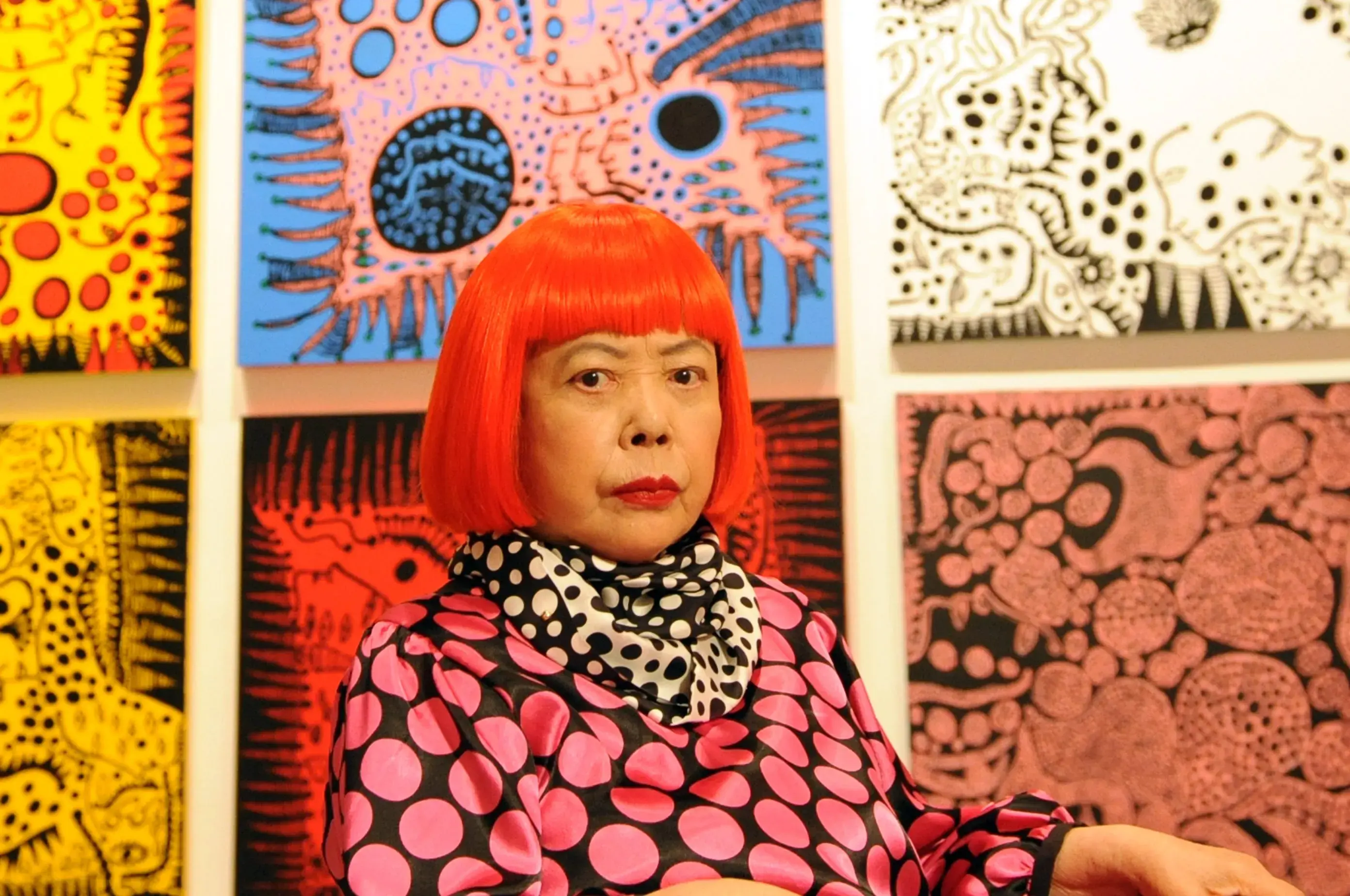
Yayoi Kusama’s Style Was Larger Than Life
How Kusama Turned Obsession Into Iconography
Japanese artist Yayoi Kusama, now in her late 90s, continues to redefine the intersection of art, fashion, and personal identity through bold, immersive expressions that transcend traditional boundaries. Her distinctive aesthetic—marked by polka dots, infinity nets, and vivid repetitions—has evolved from canvas to clothing, performance, and global collaborations, making her one of the most recognizable creative figures of the 21st century. Kusama’s influence extends far beyond galleries, shaping how audiences experience art in everyday life.
Breaking News
 Gisele Bündchen Returns to Victoria's Secret for 2026 Show
 Kylie Jenner Walks Victoria’s Secret Runway in $50 Million Fantasy Bra
 Brooklyn's Master Stylist and Educator
 Keeping Salon-Fresh Color Vibrant Between Appointments
Her self-expression has long operated outside conventional categories, blending avant-garde art with wearable design in ways that challenge the separation between high culture and popular consumption. Early in her career, Kusama used fashion as an extension of her psychological and artistic vision, creating garments covered in her signature motifs during performances in 1960s New York. These pieces were not mere costumes but extensions of her hallucinatory experiences and obsessive-compulsive tendencies, transforming the body into a living canvas. Over decades, this approach matured into formal partnerships with luxury brands like Louis Vuitton, where her designs brought avant-garde sensibility to mainstream audiences without diluting her core artistic language.
What Happens When Art Refuses to Stay in the Frame?
Kusama’s repetitive patterns—dots, nets, and accumulations—are rooted in her lifelong hallucinations, which she has described as both torment and liberation. By externalizing these internal visions through art and fashion, she transformed personal struggle into universal language. Her 2012 collaboration with Marc Jacobs at Louis Vuitton featured hand-painted dolls, infinity-motif luggage, and clothing that sold out globally, proving that her psychological depth could resonate commercially. Critics noted that the collection succeeded not because it was wearable art, but because it preserved the intensity of her original visions. Kusama has said she creates to „obliterate herself,” yet in doing so, she has become more visible than ever—her image, often framed by wigs and polka-dot ensembles, as recognizable as her work.
Kusama’s refusal to confine her expression to traditional mediums has inspired a generation of artists to explore multimedia identities. Her work demonstrates that authenticity, not medium, defines artistic value. Museums now design exhibitions around her immersive installations—like the Infinity Mirror Rooms—knowing visitors seek not just to observe but to inhabit her world. Fashion, in this context, becomes another doorway into her universe. As she approaches her 100th year, Kusama shows no sign of slowing; new installations continue to open worldwide, and her licensed products remain in demand. Her legacy lies not in any single medium, but in proving that when art is lived fully, it cannot be contained.
How did Kusama’s early fashion experiments influence her later work? In the 1960s, Kusama created hand-sewn garments covered in her signature patterns for performances and happenings in New York. These early pieces established fashion as a valid extension of her artistic practice, laying the groundwork for later collaborations by proving that clothing could carry the same psychological weight as her paintings or sculptures.
Frequently Asked Questions
Why do luxury brands seek partnerships with Kusama despite her avant-garde reputation? Brands value Kusama not just for her global recognition, but for the emotional authenticity and psychological depth embedded in her designs. Her motifs are instantly recognizable yet deeply personal, allowing collaborations to feel both exclusive and meaningful—offering consumers a connection to art that feels genuine rather than merely decorative.
What role does self-obliteration play in Kusama’s artistic identity? Kusama has stated that she creates art to „obliterate herself,” meaning to dissolve her individual ego into the infinite patterns she reproduces. This paradox—using intense self-expression to erase the self—has become central to her work, allowing her to transform personal anxiety into universal, meditative experiences that invite viewers to lose themselves in repetition.