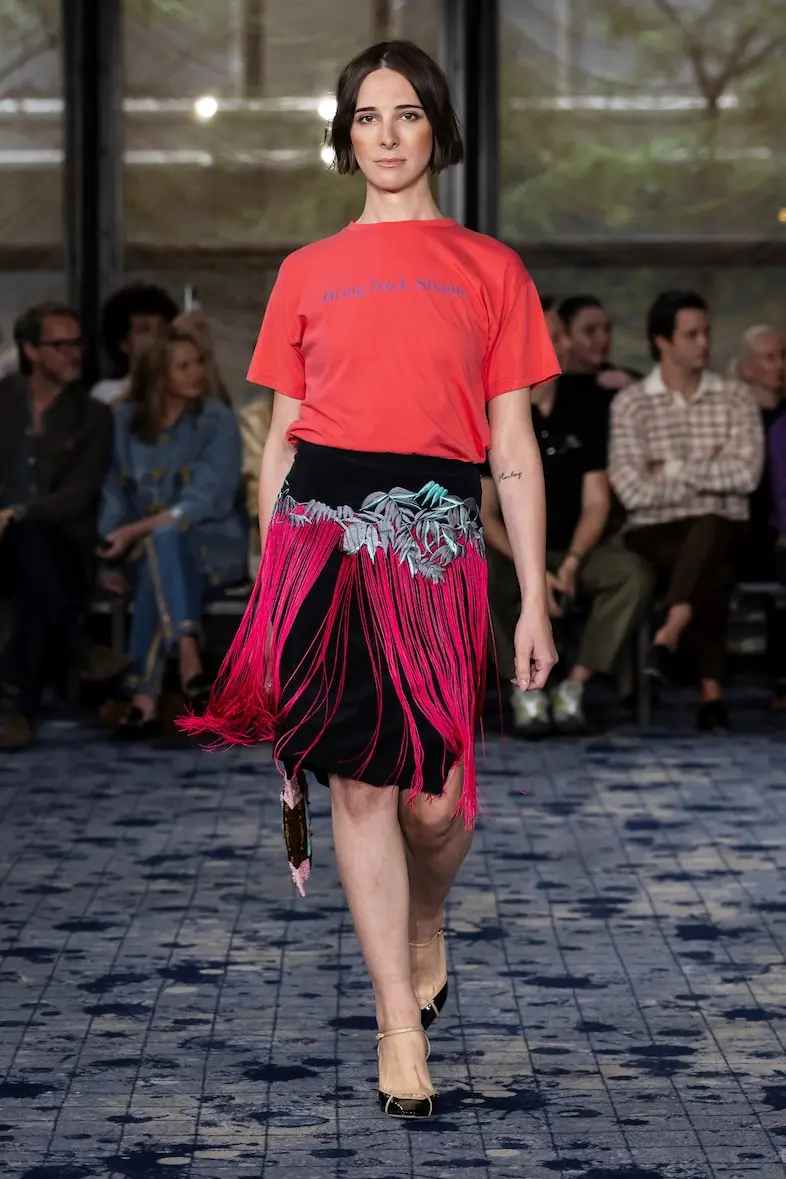
Conner Ives Aims to ‘Bring Back Shame’ in Debut NYFW Show for SS27
Why Does Ives Believe Shame Has a Place in Fashion?
British designer Conner Ives unveiled his first-ever New York Fashion Week collection for Spring/Summer 2027 on September 15, 2026, presenting a bold reinterpretation of American identity through exaggerated silhouettes and provocative styling. The show, held in a repurposed industrial space in Manhattan’s Meatpacking District, drew attention for its theatrical take on national pride and cultural excess. Ives framed the presentation as a deliberate challenge to contemporary notions of taste and restraint.
Breaking News
 Dakota Johnson Turns Heads in Daring Lace Top for Saturday Night Live Promo
 Dakota Johnson Celebrates Birthday in Daring Sheer Gown
 Margaret Qualley Stuns in Black Chanel Gown at New York Film Screening
 Emma Stone Stuns in Low‑Cut Louis Vuitton Dress at New York Film Festival
The collection featured voluminous gowns, sequined workwear, and reimagined denim pieces adorned with slogans like „God Bless the Ugly” and „Shame Is Sexy.” Ives described the aesthetic as a „twisted celebration” of American passion, drawing inspiration from reality TV, evangelical rallies, and mid-century roadside kitsch. Models walked with exaggerated gestures, some holding oversized props like foam fingers and glitter-covered Bibles. The designer said he wanted to provoke discomfort, arguing that shame has been erased from public discourse and needs to be reintroduced as a moral compass.
Can Fashion Really Influence Moral Conversations?
Ives argued that modern culture confuses freedom with a lack of accountability, leading to a homogenization of expression where nothing feels truly transgressive. He cited the rise of algorithm-driven trends and influencer culture as forces that discourage genuine risk-taking. „Shame isn’t about guilt,” he explained backstage. „It’s about knowing you’ve crossed a line—and doing it anyway because it means something.” The collection’s use of sacred and secular symbols in close proximity was intended to highlight this tension, forcing viewers to confront their own biases.
While some critics dismissed the show as costume-like or overly literal, others praised its willingness to engage with uncomfortable themes. Fashion historian Valerie Steele noted that Ives’ approach echoes historical moments when designers used clothing to comment on social norms, such as Vivienne Westwood’s punk era or Jean Paul Gaultier’s religious provocations. „Fashion has always been a mirror,” Steele said. „What Ives is doing isn’t new—but it’s rare to see it done with this level of sincerity and spectacle.” The SS27 collection has already sparked debate in academic circles about the role of discomfort in aesthetic judgment.
What inspired Conner Ives to focus on shame as a theme for SS27? Ives said he observed a cultural shift where public figures rarely face consequences for controversial actions, leading to a sense of moral flatness. He believes fashion can reintroduce shame as a tool for reflection, not punishment.
Frequently Asked Questions
How did the audience react to the show’s provocative elements? Reactions were mixed: some walked out during the finale, while others gave a standing ovation. Social media clips of models holding protest-style signs went viral, generating over 2 million views within 24 hours.
Will Ives continue to explore political or social themes in future collections? Though he avoided labeling himself a political designer, Ives confirmed that future work will continue to question societal norms, stating, „If fashion doesn’t make you uneasy sometimes, it’s not doing its job.”